How can organic social posts make my Meta ads perform better?
By TruScope Editorial

A modern digital presence is no longer optional, but foundational.
Most businesses treat organic social and paid Meta ads like two separate departments. One team posts to Instagram and Facebook for brand awareness. Another team builds campaigns in Ads Manager and prays the creative works. That split is costing you money.
Here's the reframe. Your organic feed is a free, ongoing experiment that tells you exactly what your audience wants to see before you ever spend a dollar on media. Every post you publish organically is a tiny test. The likes, comments, shares, saves, and watch time on that post are real signals from real people in your actual audience, not a focus group or a guess. If you're not using that data to inform your paid strategy, you're skipping the cheapest research phase available to any advertiser.
This post breaks down how to actually use organic performance to build smarter paid campaigns, how to measure your combined reach so you're not double counting your audience, whether your organic posts are secretly competing with your own ads, and why the most "unpolished" looking ads often outperform the expensive ones.
Why Your Organic Feed Is the Best Research Tool You're Not Using
When you post organically, Meta's algorithm shows that content to a small slice of your followers first, then decides how far to extend it based on how people react. That's essentially a built in test audience. A post that gets strong engagement in its first few hours (comments, shares, saves) is a post the algorithm itself has already validated as worth showing to more people.
That's exactly the logic behind using organic data to pick paid winners. As Social Media Examiner has pointed out in their work on boosting video content, the goal isn't to guess which video might perform well in an ad. It's to look at which videos already performed well organically (measured by watch time, retention, and shares) and then put money behind those specific pieces. You're not funding a hypothesis. You're funding a proven performer.
This matters because creative, not targeting or budget, is usually the biggest lever in a Meta campaign's performance. You can have perfect targeting and still get a 0.5% click through rate if the creative doesn't stop the scroll. Organic posting lets you test dozens of creative concepts for free, then only pay to amplify the ones that already proved they resonate.
The Metrics That Actually Predict Ad Success
Not every organic metric is equally useful for predicting paid performance. Likes feel good but they're the weakest signal. Here's what to actually watch when you're scanning your organic posts for paid candidates.
- Saves. A high save rate means people found the content valuable enough to come back to. This is one of the strongest predictors that a post will convert in a paid feed too.
- Shares. When someone shares your content to their own story or sends it to a friend, they're vouching for it. That kind of organic trust transfers well into paid placements.
- Average watch time and retention on video. If people are watching past the first three seconds and sticking around to the end, that same hook will likely work when the video shows up as an ad.
- Comment sentiment, not just comment count. Scroll the actual comments. Are people tagging friends, asking where to buy, or arguing in the comments? All three signal strong engagement, but they tell you different things about why the content worked.
- Click through rate on any link in the post. If you included a link and people clicked it organically, that's a near perfect proxy for how the post will perform with a "Shop Now" or "Learn More" button attached in Ads Manager.
A good rule of thumb from agencies running Meta ads daily is this. If a piece of organic content outperforms your account's average engagement rate by 2x or more within the first 48 hours, it's a strong candidate to boost or rebuild as a paid ad. If it underperforms your average, don't force it into a paid budget just because you spent time producing it.
How to Turn a Winning Organic Post Into a Winning Ad
Once you've identified a post that performed well organically, you have two paths. You can boost the existing post directly, or you can rebuild it as a new ad inside Ads Manager. Each has a specific use case.
Boosting the existing post keeps the original likes, comments, and shares attached to it. This is called "social proof," and it matters more than most advertisers realize. A cold audience is far more likely to trust and engage with a post that already shows 400 comments and 2,000 shares than an identical ad with zero engagement history. If your winning post already has strong social proof, boost it directly rather than rebuilding it from scratch.
Rebuilding the ad in Ads Manager makes more sense when you want to test variations (different headlines, different calls to action, different audiences) or when you need more detailed conversion tracking than a simple boost allows. A boosted post is quick but limited. A full ad campaign built from the same winning creative gives you access to detailed audience targeting, A/B testing, and conversion objectives like purchases or leads.
- Pull your top 3 to 5 organic performers from the last 30 to 60 days using Meta Business Suite insights.
- Sort by saves and shares first, then cross reference with watch time if it's video content.
- For your top pick, decide whether to boost directly (to keep social proof) or rebuild as a full campaign (for better targeting and tracking).
- Test the winning creative against 1 to 2 new variations rather than replacing it entirely. Keep the proven hook, change the offer or caption.
- Give each test at least 3 to 5 days and a meaningful spend level before judging results. Meta's delivery system needs time to exit the learning phase.
Measuring Your Combined Reach (So You're Not Double Counting Your Audience)
One of the most common questions business owners ask is how to actually measure the combined reach of organic posts and paid ads together, since they're reported separately by default. The honest answer is that Meta doesn't give you one single unified "total reach" number out of the box, and that's by design, because organic and paid reach are calculated differently.
According to Meta's own Business Help Center, reach for a Page is counted as the number of unique accounts that saw your content at least once, and organic reach and paid reach are tracked as separate metrics because they come from different delivery systems (the News Feed algorithm versus the ad auction). The same person can be counted in both your organic reach and your paid reach for the same piece of content if they saw it both ways.
To get a realistic picture of your combined footprint, use Meta Business Suite insights to look at total reach at the Page level over a time period, rather than trying to manually add organic and paid reach numbers together (which will overstate your real audience due to overlap). For campaign specific reach, Ads Manager will show you paid reach and frequency directly. The goal isn't a perfect combined number. It's directional awareness of whether you're reaching new people or just re-showing the same content to the same audience.
Will Your Organic Posts Compete With Your Own Ads?
This is a legitimate worry, especially for smaller accounts. If you're running ads to a custom audience of your own followers or website visitors, and you're also posting organically to that same group, are you just splitting your own attention and budget against yourself?
The short answer is no, not in any way that should concern you, and Buffer's guide to Facebook advertising makes a similar point. Organic and paid content serve different jobs in the funnel. Organic content builds relationship, trust, and brand recall over time with people who already follow you. Paid ads are built to reach people who don't yet follow you, retarget people who showed intent but didn't convert, and drive a specific action right now. These are complementary jobs, not competing ones.
Where real cannibalization can happen is frequency fatigue, meaning when the same small audience sees your organic post and then your ad for the same offer within a day or two, and it starts to feel repetitive rather than reinforcing. The fix isn't to stop posting organically. It's to be intentional about sequencing.
- Use organic posts to build the relationship (educational tips, behind the scenes, customer stories) and save the hard sell for paid ads targeting warmer or colder audiences.
- If you're retargeting website visitors or past customers, make sure the ad creative feels different from what they saw organically that week, not an identical repost.
- Keep an eye on frequency in Ads Manager (the average number of times one person sees your ad). If frequency climbs past 3 to 4 within a short window and performance is dropping, pull back or refresh the creative.
- Let your organic content test new angles and offers before you commit paid budget to them, since organic has no media cost attached to a bad guess.
Why Ads That Look Organic Often Outperform Polished Ones
There's a reason so many brands have shifted budget toward raw, handheld, user-generated style content instead of glossy studio production. People scroll Instagram and Facebook expecting to see content from friends, creators, and brands that feels native to the platform. The moment an ad looks like a traditional commercial, the brain flags it as an interruption and the thumb keeps scrolling.
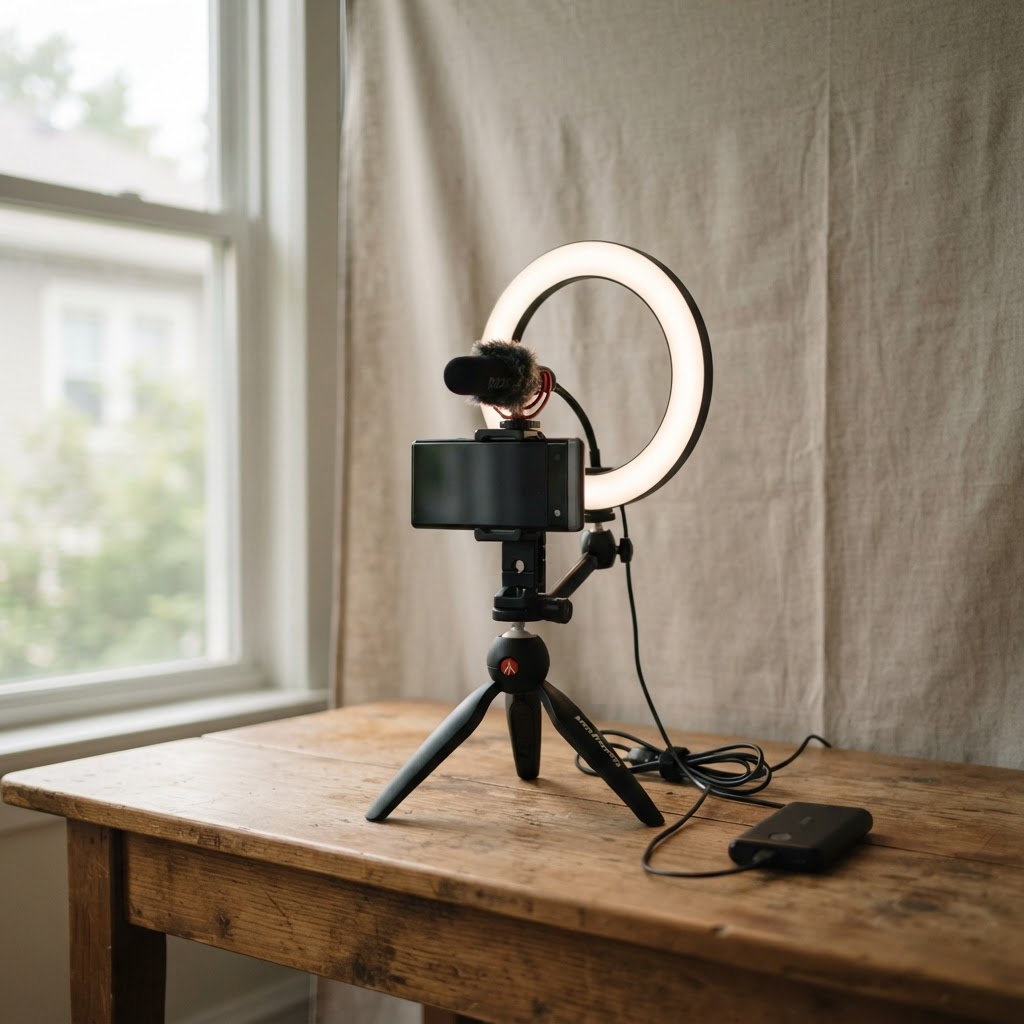
HawkSEM's roundup of effective Facebook ad examples highlights a pattern worth paying attention to. Many of the highest performing ads borrow directly from organic formats people already trust, like founder-to-camera videos, authentic customer testimonials, and casual product demos shot on a phone rather than a professional camera rig. The ad doesn't look like an ad. It looks like a post from someone you'd actually follow.
Practically, here's what that means for your creative production.
- Shoot vertical (9:16) rather than horizontal. It fills the full screen on Reels and Stories placements and matches how organic video actually looks in the feed.
- Keep text overlays simple and native, similar to how a creator would caption their own video, rather than a heavily designed graphic template.
- Lead with a real person talking directly to the camera in the first 2 to 3 seconds, since this format consistently holds attention better than product shots alone.
- Resist the urge to over produce. A phone shot video with natural lighting and an authentic hook often beats a studio production precisely because it doesn't trigger "this is an ad" pattern recognition.
- Use real customer reviews or UGC submissions as ad creative whenever you have them. Borrowed trust from a real customer is harder to fake and performs accordingly.
Your Organic to Paid Testing Workflow
Pulling all of this together, here's a repeatable monthly process you can run without any special software.
- Week 1 and 2. Post consistently across your organic channels, testing different hooks, formats, and topics without worrying about immediate conversion. Treat this as your research phase.
- Week 3. Review performance in Meta Business Suite insights. Rank posts by saves, shares, and watch time (for video). Identify your top 2 to 3 performers.
- Week 4. Decide whether to boost the top organic post directly (to retain social proof) or rebuild it as a full Ads Manager campaign with proper targeting and conversion tracking.
- Ongoing. Monitor frequency and reach overlap so your paid and organic content are complementing rather than repeating each other to the same small group.
- Ongoing. Feed learnings back into your organic content calendar. If a certain hook or format wins as an ad, create more organic content in that same style to keep the testing pipeline full.
The compounding effect of this workflow is the real payoff. Every month you run it, your organic content gets smarter because you're learning what actually earns engagement, and your paid campaigns get cheaper and more effective because you're only spending media budget on creative that's already proven itself. Over a few quarters, that turns into measurably lower cost per result and a creative library that keeps performing instead of constantly starting from zero.
Final Thought
The businesses winning on Meta right now aren't necessarily the ones with the biggest ad budgets. They're the ones treating their organic feed as a live testing ground instead of a separate checkbox from their paid strategy. Every post you publish is free data. Every comment, save, and share is telling you something about what your audience actually wants, and that information is worth more than any amount of guessing inside Ads Manager.
Start small. Pull your last 30 days of organic posts, rank them by saves and shares, and boost or rebuild your top performer this week. Pay attention to what happens. Then make it a habit, not a one-time experiment.
Let's build something remarkable.
Websites, apps, marketing, and intelligent systems built around what your business needs next.
Let's Grow My Business