How can I scale my Meta ads budget without ruining my results?
By TruScope Editorial

A modern digital presence is no longer optional, but foundational.
You finally found a Meta ad set that works. ROAS is solid, cost per purchase is where you want it, and now you're staring at the budget field wondering how hard you can push it. This is the moment where most advertisers make a costly mistake. They double or triple the budget overnight, watch the algorithm panic, and spend the next two weeks wondering why their winning ad set suddenly looks like a loser.
Scaling Meta ads isn't about bravery or budget size. It's about sequencing. There's a right order of operations, a right pace, and a right set of signals to watch before you touch that spend number again. Get the sequence wrong and you'll tank your cost per result right when you need it most. Get it right and you can grow spend 5x, 10x, even 20x while keeping your efficiency close to where it started.
This guide breaks down exactly how to scale without wrecking performance, drawing on how Meta's delivery system actually behaves, what real advertisers are seeing in the field right now, and the specific checkpoints you should hit before increasing spend again.
Why Scaling Breaks ROAS (and why it's not random)
Every time you change the budget on an ad set, you're disrupting the learning the algorithm has already done. Meta's delivery system optimizes based on a feedback loop. It learns who responds to your ad, when they're online, and what signals correlate with a conversion. A sudden budget change forces it to re-test some of those assumptions, which is why performance often dips right after a budget increase.
The bigger the jump, the bigger the disruption. A 20 percent increase barely registers. A 100 percent or 200 percent increase can trigger what's commonly called re-entering the learning phase, where Meta needs roughly 50 new conversions (per Meta's own guidance on the learning phase) to re-stabilize delivery. During that window your cost per result can spike, your ROAS can dip, and if you panic and pull the budget back down, you reset the clock all over again.
This is the core reason most "just increase the budget" advice fails. It's not that scaling itself is risky. It's that scaling too fast forces the algorithm to relearn delivery before it has new data to learn from. The fix isn't to avoid scaling. It's to scale in increments small enough that the algorithm can absorb the change without losing its footing.
The 20 Percent Rule (and when to break it)
The most reliable framework for vertical scaling (increasing budget on the same ad set) is the 20 percent rule. Increase your daily budget by no more than 20 to 25 percent at a time, and wait at least 3 to 4 days between increases. This gives the algorithm enough runway to find new audience segments at the higher spend level without blowing past the data it already trusts.
Here's what that actually looks like in practice if you're scaling a winning ad set from $15 a day:
- Day 1: $15/day (baseline, already profitable for at least 3-4 days)
- Day 4: $18/day (20 percent increase)
- Day 8: $22/day
- Day 12: $26/day
- Day 16: $31/day
- Day 20: $37/day
At that pace, getting from $15/day to $100/day takes roughly 45 to 60 days if you follow it strictly. That might feel painfully slow if you're excited about a winner, but it's the price of keeping your ROAS stable. According to the scaling framework outlined by Stackmatix, most advertisers who try to compress this timeline by scaling faster than 20 to 30 percent every few days see cost per result climb noticeably within the first week, even on ad sets with a strong track record.
There are exceptions. If you're running a campaign with Advantage+ campaign budget (Meta's automated budget distribution across multiple ad sets) and you have a large amount of historical conversion data, Meta's own system can sometimes tolerate faster increases because it's reallocating budget across several proven ad sets rather than forcing one single ad set to absorb the entire jump. But if you're scaling a single ad set in isolation, the 20 percent rule is the safer default.
How Long Should You Wait Before Scaling at All?
Before you even touch the budget slider, your ad set needs to prove itself over a meaningful window, not just a good day or two. The general benchmark most performance marketers use is this: don't scale until you've seen at least 3 to 4 consecutive days of stable or improving results, and ideally until the ad set has exited Meta's learning phase (which typically requires about 50 optimization events, usually purchases, within a 7 day window).
Why does this matter so much? Because a single good day can be noise. Maybe you got a spike in traffic from an influencer mention, or a competitor paused their campaigns, or it was just payday for your audience. Scaling off a fluke is how advertisers end up confused about why their "winning" ad set suddenly stopped winning.
Before increasing budget, check for these specific signals:
- The ad set has fully exited the learning phase (check the delivery column in Ads Manager for the "Active" status without a learning limited warning)
- Cost per result has been flat or declining over the last 3-4 days, not just on the single best day
- Frequency (average times each person has seen your ad) is still under 2.5 to 3, meaning you haven't saturated the audience yet
- ROAS or CPA has held steady across at least 50 conversions, which gives Meta's algorithm enough of a pattern to work from
- You're not mid-week in a seasonal dip or spike that could distort the read
If any of those boxes aren't checked, hold off. Scaling on incomplete data is one of the most common reasons ROAS tanks right after a budget bump, and it has nothing to do with the creative or the offer. It's simply a timing mistake.

Vertical Scaling vs Horizontal Scaling: Do You Need Both?
This is one of the most debated questions among performance marketers right now, and the honest answer is that relying on vertical scaling alone eventually hits a ceiling. Vertical scaling (raising the budget on an existing winning ad set) is efficient because it preserves the data and learning the ad set already has. But Meta's auction has limits. At a certain spend level, you'll have exhausted the cheapest, most responsive slice of your audience, and the algorithm starts reaching into colder, less qualified segments to keep spending your budget. That's when cost per result climbs even if you've scaled perfectly by the book.
This is where horizontal scaling comes in: duplicating your winning ad set into new campaigns, testing it against fresh audiences, or layering it into a broader campaign structure (like Advantage+ shopping campaigns) rather than just pushing more dollars into the same ad set. In discussions among advertisers managing accounts in 2026, including a widely shared thread on r/FacebookAds, a common theme emerges: most experienced advertisers don't pick one approach exclusively. They scale vertically first to a comfortable ceiling (often somewhere between 2x and 4x the original budget), and once performance starts to soften, they duplicate the winning ad set into a second campaign to access a fresh slice of the auction rather than continuing to push a saturated one.
Here's a practical way to think about combining both:
- Scale vertically first using the 20 percent rule until you hit 2.5x to 3x your starting budget
- Watch frequency and cost per result closely as you approach that ceiling. If frequency climbs past 3 and cost per result rises for 2+ consecutive days, you're likely saturating the audience
- Duplicate the winning ad set (same creative, same targeting) into a new campaign rather than piling more budget into the original
- Let the duplicate run as its own learning phase. It will compete in a slightly different auction pool even with identical settings, often unlocking new reach
- Repeat the vertical scaling process on the duplicate once it stabilizes
This combined approach is why horizontal duplication isn't just a backup plan, it's often a necessary second gear once vertical scaling plateaus. Trying to force all your growth through one ad set's budget field is like trying to pour more water into a glass that's already full. At some point you need a second glass.
Creative Testing: How Many Variants and How Long to Let Them Run
Scaling spend without scaling creative is like trying to drive faster on a car that's running out of gas. Audience fatigue (when the same people see your ad too many times) accelerates as you increase budget, because you're pushing more impressions toward the same pool of people in a shorter window. Without new creative in rotation, your frequency climbs, your click through rate drops, and your cost per result follows right behind it.
Based on patterns discussed by advertisers managing active accounts, a reasonable testing cadence looks like this:
- Test 3 to 5 new creative concepts at a time, not just minor variations of the same ad. Different hooks, different formats (video vs static vs UGC style), and different angles give you a real read on what resonates
- Give each new creative at least 3 to 4 days and a minimum spend threshold (often cited around $50 to $100 per creative, depending on your average order value) before judging it
- Kill creatives that show a cost per result more than 20 to 30 percent above your account average after that testing window, assuming spend has been sufficient to be statistically meaningful
- Keep winners in rotation but refresh supporting creative every 1 to 2 weeks as you scale, since your top performer will fatigue faster at higher spend levels
- Feed new creative into your scaling ad sets gradually rather than swapping everything at once, so you can still isolate what's driving performance changes
The advertisers seeing the most success in 2026, per the same r/FacebookAds discussion referenced earlier, consistently mention that creative refresh rate matters more now than it did a few years ago. Audiences scroll past repetitive ads faster, and Meta's own delivery system rewards fresh creative with better initial delivery costs because it hasn't accumulated negative feedback signals yet. If you're scaling budget but still running the same three creatives from two months ago, that's often the real reason ROAS is slipping, not the budget increase itself.
The Signals That Tell You It's Time to Scale (and the Ones That Say Wait)
Knowing when to scale is less about gut feeling and more about pattern recognition. Here are the specific signals worth tracking before every budget increase.
- Green light to scale: Cost per result has stayed flat or improved for 3-4 straight days at current spend
- Green light to scale: Frequency is under 2.5, meaning there's still fresh audience to reach
- Green light to scale: ROAS or CPA is hitting your target consistently, not just on your best-performing day
- Red light, hold off: Frequency is climbing past 3 and CTR is dropping week over week
- Red light, hold off: You changed the creative, audience, or offer in the last 3 days (give it time to stabilize first)
- Red light, hold off: Cost per result spiked in the last 48 hours without a clear external cause (seasonality, competitor activity, platform-wide issue)
One pattern worth calling out specifically, since it's referenced in multiple advertiser breakdowns of scaling methodology including Space Ads: ROAS dropping right after a budget increase doesn't always mean the scale was a mistake. Sometimes it means the algorithm is temporarily reaching slightly colder audience segments to spend the new budget, and performance recovers within 3 to 5 days as it finds its footing. The mistake isn't the dip itself, it's panicking and reversing the budget change before giving the algorithm time to adjust. Reversing too early resets the learning phase and creates a second disruption on top of the first.
Building a Scaling Checklist You Can Actually Follow
Everything above works better when it's not just theory you remember, but a repeatable process you run every time you're ready to scale. Here's a condensed version you can use as a working checklist.
- Confirm the ad set has exited the learning phase and has at least 50 conversions in a 7-day window
- Confirm cost per result and ROAS have been stable or improving for 3-4 consecutive days
- Increase budget by no more than 20-25 percent
- Wait 3-4 days before the next increase, resisting the urge to check results hourly
- Monitor frequency. Once it crosses 2.5 to 3, start preparing a duplicate campaign or fresh creative
- At 2.5x to 3x your starting budget, duplicate the winning ad set into a new campaign rather than continuing to push the original
- Keep 3-5 fresh creative concepts in testing at all times so you're never relying on one aging winner
- If performance dips after a scale, hold for 3-5 days before making any further changes unless the drop is severe (over 40-50 percent worse than baseline)
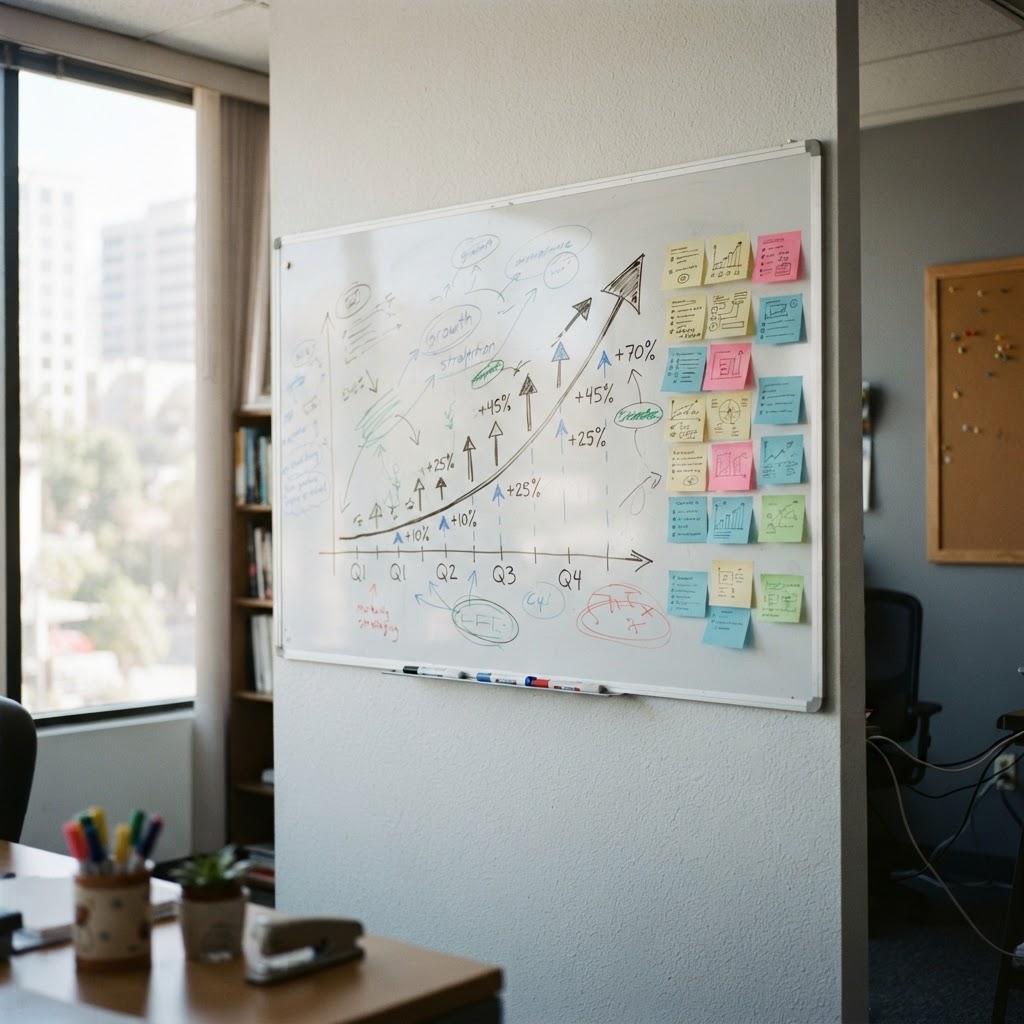
How to Take Action This Week
If you've got a winning ad set right now and you're itching to scale it, here's the simplest way to start without overthinking it. Pull up your Ads Manager and check how many days of stable performance you actually have, not just your best day. If it's fewer than 3 to 4 days, wait. If you've got the data, increase the budget by 20 percent today, set a reminder for 3 to 4 days from now, and resist the urge to touch it in between.
While that scale plays out, use the waiting period productively. Draft your next batch of creative concepts so you're not scrambling when frequency starts climbing. Map out what your duplicate campaign structure will look like once you hit your vertical scaling ceiling. Scaling well isn't a single action, it's a cadence, and the advertisers who handle it best are the ones who treat it like a weekly operating rhythm rather than a one-time decision they make when they're feeling confident.
Final Thought
Scaling Meta ads without breaking performance isn't a secret trick or a hidden setting. It's discipline. It's the willingness to grow slower than you want to in exchange for growing more reliably than most of your competitors ever do. The accounts that scale successfully from $15 a day to $100 a day and beyond aren't the ones who found some magic budget jump that works every time. They're the ones who respected the algorithm's learning process, paired vertical scaling with horizontal duplication at the right moments, and never let their creative library go stale while they were busy chasing bigger numbers.
Treat every scale like an experiment with a hypothesis, a waiting period, and a clear set of signals you're watching for. Do that consistently, and the budget increases stop feeling risky. They start feeling like exactly what they should be: the natural next step for an ad set that's already proven it works.
Let's build something remarkable.
Websites, apps, marketing, and intelligent systems built around what your business needs next.
Let's Grow My Business